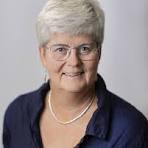
Prof. Dr. Marit Honerød Hoveid
President of the European Educational Research Association (EERA)
Keynote Title: “Promoting Peace through Educational Research”
Biography: Marit Honerød Hoveid is the current President of the European Educational Research Association (EERA), a role she began in September 2023 for a four-year term, coming from her position as a Professor of Pedagogy at the Norwegian University of Science and Technology (NTNU). She has a long history with EERA, previously serving as its Secretary General, and leads the organization in promoting educational research across Europe, focusing on reflexive and interdisciplinary approaches to teaching and learning.
Abstract: In this keynote I will address two aspects of educational research – one related to structures (how) and one related to content (what). My contention is that educational research can play a central role in laying the ground for the peaceful development of societies. In human societies, education is required to communicate knowledge from one generation to the next. Central principles for comprehensive education are related to participation and equal rights to education. Through educational processes democratic values may or may not be promoted.
Educational research for the benefit of education and society, which is the core aim of EERA (the European Educational Research Association), entails the building of institutions and infrastructures that can promote this. EERA as an overarching structure and institution holds a promise – that we can meet across differences. EERA’s yearly conference is a meeting place to engage in scholarly discussion around educational topics. Addressing peace as an educational topic means, in accordance with Johan Galtung (Norwegian peace researcher). looking at the underlying ideas and not reach directly for a solution – how could educational research play a part in this?
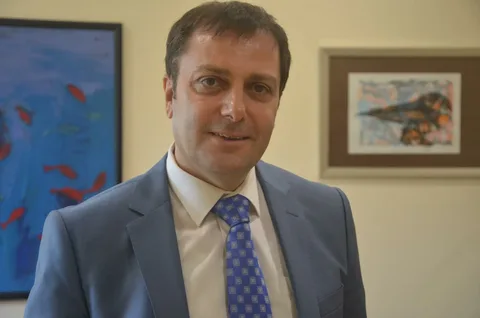
Prof. Dr. Servet Bayram
Faculty of Education, Department of Educational Sciences, Istanbul Medipol University.
Keynote Title: “Educational Research Paradigms for a Digital Anthropocene: Neuroscience, Psychology,
Educational Therapy, and Ergotherapy”
Biography: Prof. Dr. Servet Bayram completed his bachelor’s degree in psychology at Istanbul University (1981-1985), his Clinical Internship at Bakırköy Psychiatric Hospital (1984-1986), and his Master’s degree at Boğaziçi University (1991), İstanbul. He worked as a School Psychologist at Boğaziçi
University (1988-1992). He completed his Doctorate in Learning and Teaching at the
University of Pittsburgh, USA (1992-1995) and his Post-Doc at Indiana University, USA
(1996). He became an Associate Professor in 2000 and a professor in 2006. He established the
“Human-Computer Interaction Laboratory” at Marmara University, Computer Education
&Instructional Technologies (CEIT). He held various administrative and academic positions
at Yeditepe University, İstanbul (2015-2021). He currently serves as Dean of the Faculty of
Education and Head of the Guidance and Psychological Counseling Programs at İstanbul
Medipol University. He works as an educational psychologist in areas such as computer and
gaming addiction, attention-perception and academic achievement development,
psychological tests, personality, and psychotherapy.
Abstract: In the digitalized world of the Anthropocene, educational research is being reshaped through
interdisciplinary approaches that comprehensively address the cognitive, emotional, and
behavioral dimensions of learning processes. This keynote explores the transformation of
current educational research paradigms, examining the effects of digital technologies on
learning, the psychological and neuroscience-based functioning of individuals, and the
implications for pedagogical practices.
Educational therapy is presented as a structured support model that integrates educational
sciences, psychology, and therapeutic approaches to assess, intervene, and monitor learning-
related academic, cognitive, and emotional challenges. This approach is not limited to
individuals with special educational needs but also supports students experiencing academic
stress, adolescents facing attention and motivation difficulties, adults under high cognitive
load, and lifelong learners, offering preventative, supportive, and enhancing strategies for
learning.
In conjunction with ergotherapy, practical examples emphasize enhancing individual
functionality in learning and working environments, including time and energy management,
structuring academic and professional tasks, ergonomic learning and work arrangements,
sensory regulation strategies, and integrating daily living activities into learning processes.
Personalized intervention strategies are illustrated through evidence-based educational
interventions tailored to individuals’ cognitive profiles, structured applications to regulate
cognitive load in digital learning environments, development of self-regulation and
metacognitive skills, attention and mindfulness exercises, and systematic learning routines
that support academic performance. The keynote aims to provide theoretical and practical
insights into inclusive, evidence-based educational practices centered on holistic human
development.
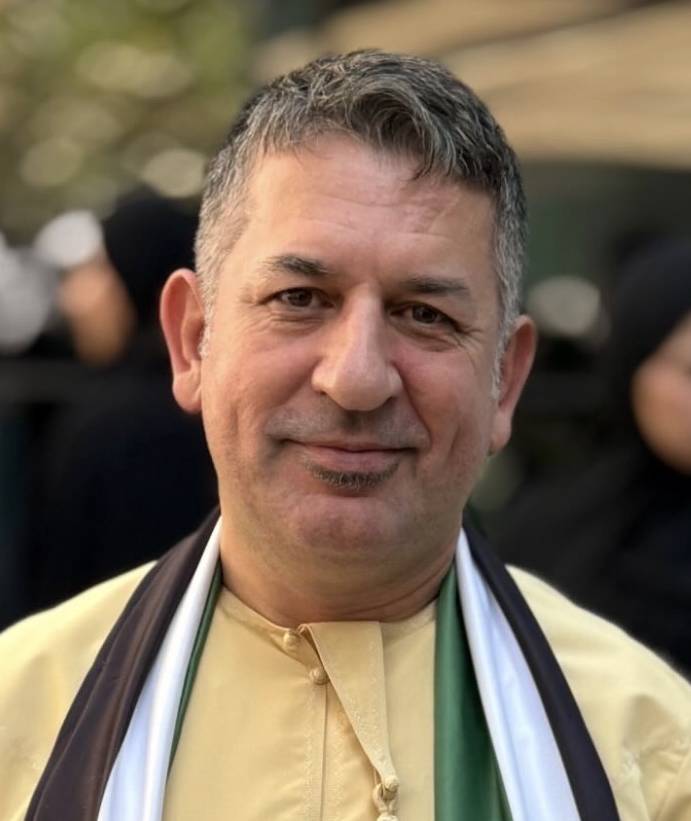
Prof. Dr. Özcan Asilkan
Business Analytics Department
Higher Colleges of Technology
Abu Dhabi, United Arab Emirates
Email: oasilkan@hct.ac.ae
Keynote Title: “Adaptive Learning Pathways Through AI Technologies”
Biography: Prof. Dr. Özcan Asilkan is an accomplished Computer Science Engineer and Academic with a robust background spanning higher education and multiple industries, including software development, data analysis, manufacturing, tourism, and healthcare. His research interests cover a broad range of interdisciplinary topics such as Management Information Systems (MIS), Business Analytics, Computer Science, Database Systems, Data Mining, Customer Relationship Management (CRM), and Hospitality Management.
With nearly 30 years of combined academic and industry experience, Prof. Asilkan has held numerous teaching and professional engagements across almost 10 countries and 15 universities worldwide.
In academia, he has served in various leadership and instructional capacities; including Dean, Chair, and Lecturer, and has taught a wide array of courses while publishing nearly 70 academic papers. He has also participated as a Chair and Keynote Speaker at more than 10 international conferences.
As a Computer Science Engineer, Prof. Asilkan has undertaken diverse professional roles such as Systems Analyst, Database Administrator, Application Developer, and Consultant, contributing to several major projects, including the implementation of CRM and ERP systems.
Since July 2024, he has been serving at the Higher Colleges of Technology (HCT) in Abu Dhabi, United Arab
Emirates.
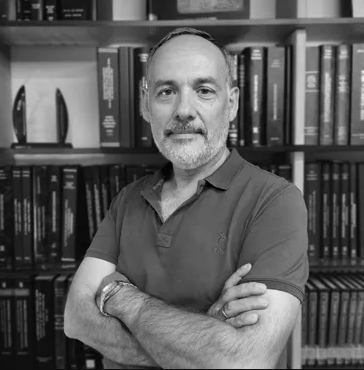
Prof. Dr. Jesus Garcia Laborda
University of Alcalá, Spain
Keynote Title: “Teaching Languages and contents in the Age of ChatGPT: Opportunities for Teachers, Learners and Educational Leaders”
Biodata: Dr García Laborda has a MA in ESL (University of Georgia), MA in English Language and Literature (University of Wisconsin), PhD in English Philology (Universidad Complutense de Madrid) and European Doctorate in Didactics (Universidad Complutense de Madrid). He has been Visiting Scholar at Penn State University and the University of Antwerp, and he has taught postgraduate courses in Lithuania, Cyprus, Turkey, Colombia and Brazil. He has also been the main researcher in four R&D projects and participated in eight more. In 2017-2018 he was Acting Director of the TAEG Knowledge Center (Cyprus) where he currently holds different positions. He has more than 270 published works. Since 2019 he has been the Dean of the Faculty of Education of Universidad de Alcalá, and before that he was the Director of the Department of Modern Philology of the same university (2016-2019). He is currently president of the European Language Association for Specific Purposes. Additionally, he is Editor in Chief of Revitas Encuentro (ESCI / web of Science), Global Journal of Foreign Language Teaching (ESCI / SCOPUS requested), Internal Journal of Learning & Teaching (ESCI / SCOPUS requested) and co-editor of Computer Assisted Language Learning Electronic Journal (SCOPUS), as well as a member of the scientific committee or evaluator of 15 other impact journals (JCR / SCOPUS / ESCI). He is a specialist in language teaching, assessment, educational technology and bilingual education.
Abstract: This presentation explores how recent artificial intelligence tools are entering foreign language classrooms and what this means for teachers, students and school leaders. Focusing on accessible applications such as chatbots (e.g., ChatGPT-type assistants), automatic feedback tools, and adaptive learning platforms, the talk shows how AI can support practice, writing, speaking preparation and formative assessment. Rather than replacing teachers, these tools expand opportunities for interaction, personalization and motivation when used critically and responsibly. Drawing on teacher education and classroom experience, the session proposes practical guidelines to integrate AI into communicative language teaching while promoting digital literacy, ethical use and informed educational leadership.
Keywords
Artificial intelligence, chatbots, language learning, formative assessmentners.
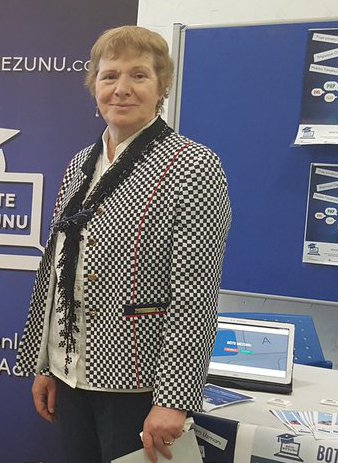
Prof. Dr. Hafize Keser (Emeritus)
Keynote Title: “The Implications of Digital Transformation for Student Rights and Laws”
Biography: She received her bachelor’s degree in 1974, her master’s degree in 1982 from Ankara
University Faculty of Education in the field of Educational Programs and Instruction, and her
doctorate in 1988 from Ankara University Faculty of Educational Sciences in the field of Educational
Technology with her thesis titled “A Model Proposal for Computer-Assisted Instruction”.
Between 1974 and 1982, he worked as an education specialist and deputy director at the
Training Center of the General Directorate of Revenues of the Ministry of Finance. From 1982 to
1989, he was a Research Assistant at the Faculty of Educational Sciences, Ankara University; from
1989 to 1998, he was an Assistant Professor in the Department of Educational Technology within the
Educational Programs and Instruction Department; and from 1998 to 2005, he served as an Associate
Professor, first in the Department of Educational Technology and then in the Department of
Computer and Instructional Technologies Education. In 2005, he received the title of Professor in the
Department of Computer and Instructional Technologies Education.
Between 1989 and 1999, she served as the Deputy Head of the Department of Educational
Programs and Instruction, and between 2000 and 2020, she served as the Head of the Department of
Computer and Instructional Technologies Education. In addition to administrative roles such as
membership in the Ankara University Ethics Committee and the Chair of the Social Sciences Ethics
Committee, she has worked as a consultant, evaluator, and monitoring expert in TÜBİTAK projects,
and as a project leader and instructor in Ministry of National Education projects. She has also worked
as an education expert, instructor, and manager in the preparation, implementation, and evaluation
phases of in-service training programs in various institutions and organizations. She has been
involved in the development of curricula for primary school grades 1-8 and in the development of
undergraduate programs in the Department of Computer and Instructional Technologies Education.
Dr. Keser has published articles in various national and international journals, authored
books, served as an editor, contributed book chapters, and presented papers at national and
international scientific conferences. She has served as an invited speaker, honorary chair/co-
chair/advisor/scientific/organizing committee member at various scientific conferences both in
Turkey and abroad. Dr. Keser has taught various courses at the undergraduate, graduate, and
doctoral levels (technology education, vocational and technical education, instructional technologies
and material development, project development and management, information ethics, computer use
in educational research, new technologies in education, multimedia material development, and
seminars on computer-assisted instruction). Her academic interests primarily focus on the
integration of information technologies into education, the development of constructivist learning
environments, information security, cyberbullying, information ethics, artificial intelligence and
ethics, digital rights and responsibilities, adult and senior education, and teacher training.
Prof. Dr. Hafize Keser, who holds the title of “Faculty Member with the Most Theses
Supervised” in her field, retired in 2020. In 2021, she served as a member of the 21st National
Education Council and in 2022 as a member of the E-Content Development Commission of the Board
of Education. In 2025, she continued her role in the Commission on the Restructuring of Vocational
and Technical Education within the Board of Education. She currently participates in scientific
congresses related to her field as an invited speaker or panelist/panel chair and continues her
scientific research.